Helen's family

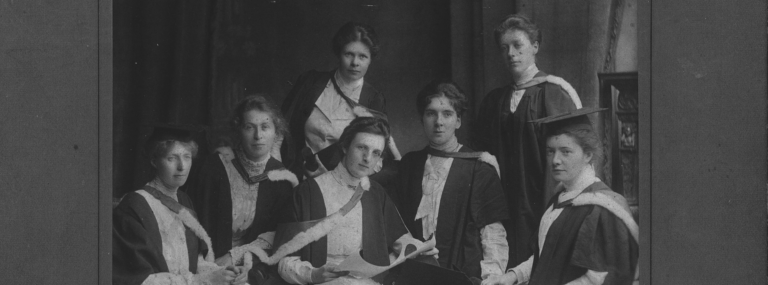
A black and white photograph of 7 women in assorted white blouses and graduation gowns. Two are wearing graduation caps. One in the foreground holds a degree certificate.

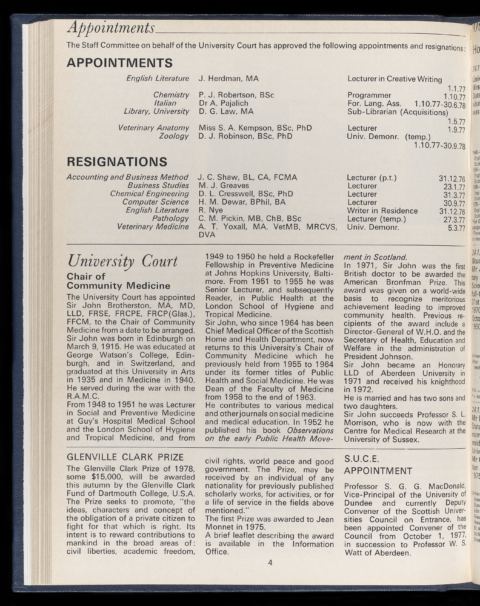
Helen was born into an established Edinburgh medical family. Her grandmother, Margaret Merry Brotherston (née Smith), a committed suffragette, was among the first women to graduate from Edinburgh Medical School and went on to pioneer healthcare and social initiatives for mothers and children. Her father, John Howie Flint Brotherston, was elected Dean of the Medical Faculty and later Chair of Community Medicine at the University of Edinburgh.

Helen followed in her family’s footsteps. She graduated from Edinburgh Medical School in 1964 and led an illustrious career in the city, in the emerging speciality of community medicine. Following ten years of service in the children’s service of the Edinburgh Public Health Department she was appointed chief administrative medical officer of the Lothian Health Board in 1988 and executive director of the Lothian Health Board in 1991. At this time, she was heavily involved in Edinburgh’s response to the HIV/AIDS crisis.

Helen’s son Ian went on to study medicine at Edinburgh as well. The Brotherston legacy is one of dedication to the Edinburgh public health scene.

An early woman graduate

Margaret graduated from the Edinburgh College of Medicine for Women in 1901, making her among the first women to qualify in medicine. Although she stopped practicing when she married, she remained dedicated to progressing women’s rights throughout her life, as a member of the suffragette movement and a cofounder of the British Federation of University Women.

The Edinburgh College of Medicine for Women was established in 1889 by the Association for the Medical Education of Women as part of Edinburgh’s extra-mural education system. Although the 1889 Universities (Scotland) Act resulted in the first women medical graduates at the University of Edinburgh, women would not be admitted to the University on an equal footing to men until 1916.
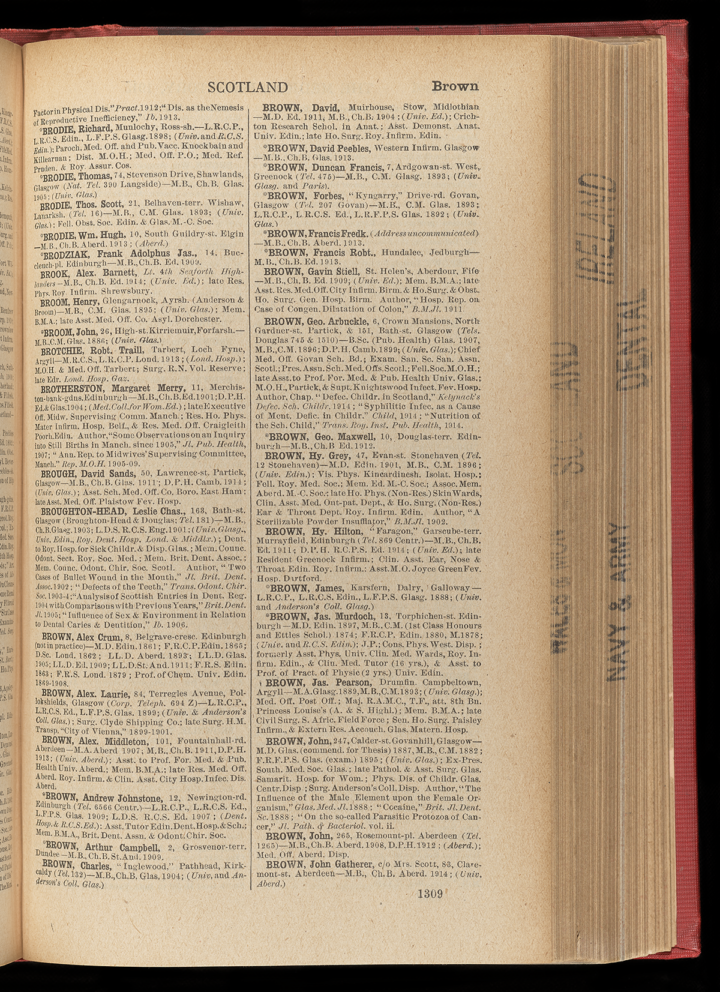
Margaret’s contribution to the healthcare of mothers and children is evidenced by the various roles listed in the 1920 medical directory.

Chair and Dean

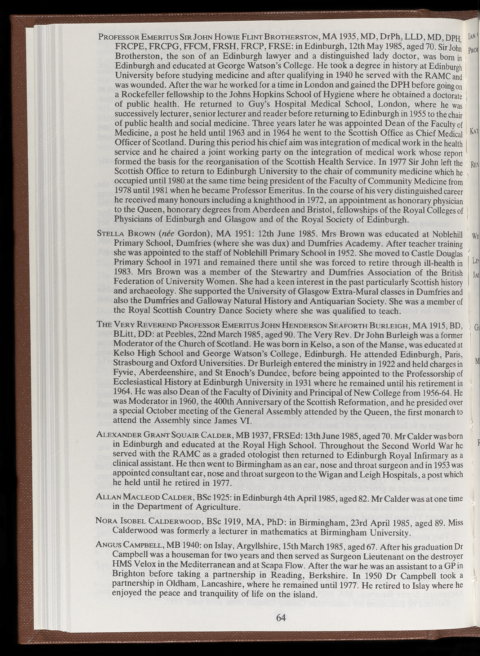
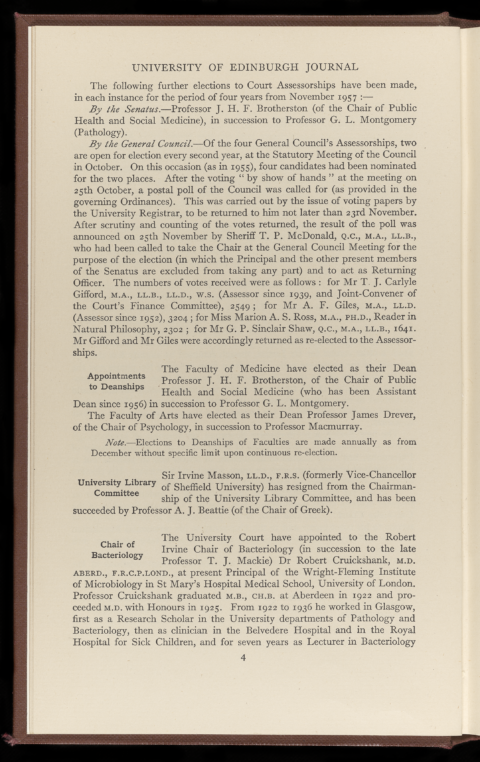
John graduated from Edinburgh Medical School in 1940 and served in the Royal Army Medical Corps until 1946. He dedicated the rest of his career to transforming public health in Scotland and further afield, as shown in the documents below.

He was appointed the Chair of Public Health and Social Medicine in 1955, and Dean of the Faculty of Medicine in 1958, undertaking an ambitious revision of the curriculum. In 1977, following a period of working closely with the World Health Organisation, he returned to Edinburgh as the Chair of Public Health. John’s obituary evidences his commitment to public health throughout his life, in Edinburgh and beyond.

Helen’s name appears in the University Calendar of 1964 – 65, showing that she graduated with a bachelor’s degree in medicine and surgery in 1964.

In this interview, Helen reflects on her family’s medical legacy, and describes her journey, alongside that of her grandmother and father, in public health in Edinburgh.